

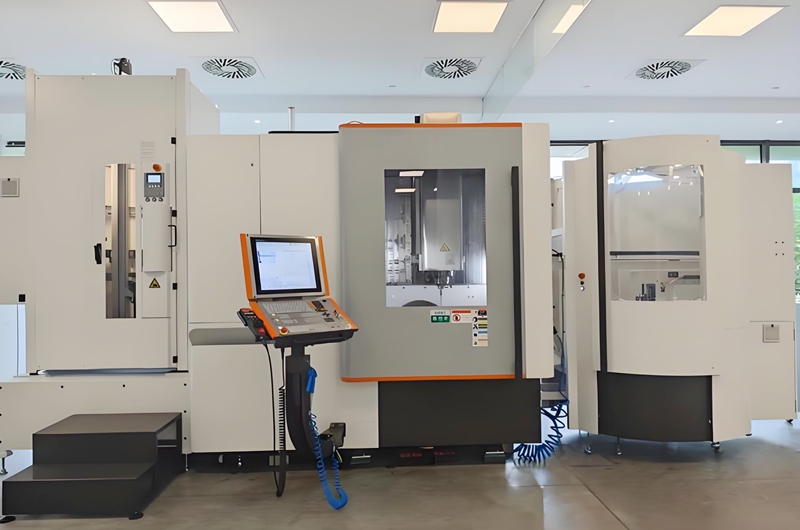
Injection molding is the most essential mass production technology for plastic products. The system primarily consists of two key components: the injection molding machine and the mold. Their collaboration is analogous to the printing press and printing plate in the printing industry.
The Injection Molding Machine: The Power and Control System
The injection molding machine is the equipment that executes the molding process. Its primary functions are plasticizing, injection, packing/holding, and mold opening/closing. Its core structure includes:
Injection Unit: Heats, shears, melts, and homogenizes plastic pellets via a rotating screw (plasticizing), then injects the melt into the mold cavity under high pressure and speed.
Clamping Unit: Provides immense clamping force to securely lock the mold during injection, preventing mold flashing caused by melt pressure.
Control System: Precisely controls all process parameters such as temperature, pressure, speed, position, and time.
The Mold: The Forming Matrix of the Product
The mold is a precision steel tool that imparts the final shape, dimensions, and surface details to the plastic. Its core functional zones include:
Cavity and Core: The concave and convex parts that directly form the product's outer and inner surfaces.
Gating System: The channels through which melt flows from the machine nozzle into the cavity.
Cooling System: Circulates coolant to rapidly and uniformly cool and solidify the product.
Ejection System: Ejects the solidified part smoothly from the mold.
Venting System: Vents air from the cavity to ensure complete filling.
Collaborative Relationship: The injection molding machine provides the energy (heat and pressure) and precise control, while the mold acts as the forming medium and heat exchanger. The design quality of the mold directly determines the product's precision and appearance, whereas the machine's process tuning determines production efficiency and internal quality. Only through their perfect match can efficient, stable, and high-quality production of plastic parts be achieved.